Play is vital to every child’s social, emotional, cognitive, physical, creative and language development. It helps make learning concrete for all children and young people, including those for whom verbal communication may be difficult.
Play Therapy can aid children in a variety of ways. During a Play Therapy intervention, children receive emotional support and can learn to understand more about their own feelings & thoughts. Through the safety of the therapeutic relationship and the play space environment, children may sometimes re-enact or play out traumatic or difficult life experiences. This play enables them to make sense of their past and gain an understanding that helps them cope better with their future.
Children may also learn to manage relationships and conflicts in more appropriate ways, thus empowering them to be more self-aware and confident in social situations.
The outcomes of Play Therapy may be general e.g. a reduction in anxiety and raised self-esteem, or more specific such as a change in behaviour and improved relations with family and friends. Sometimes the more subtle changes can be signs of internal changes taking place as children start to better understand themselves, others and their external world
Association of Play Therapy (United States) declares that ‘research supports the effectiveness of play therapy with children experiencing a wide variety of social, emotional, behavioural, and learning problems, including: children whose problems are related to life stressors, such as divorce, death, relocation, hospitalization, chronic illness, assimilate stressful experiences, physical and sexual abuse, domestic violence, and natural disasters (Bratton, Ray, Rhine, & Jones, 2005; LeBlanc & Ritchie, 2001; Lin & Bratton, 2015; Ray, Armstrong, Balkin, & Jayne, 2015; Reddy, Files-Hall, & Schaefer, 2005). Play therapy helps children:
Become more responsible for behaviours and develop more successful strategies.
Develop new and creative solutions to problems.
Develop respect and acceptance of self and others.
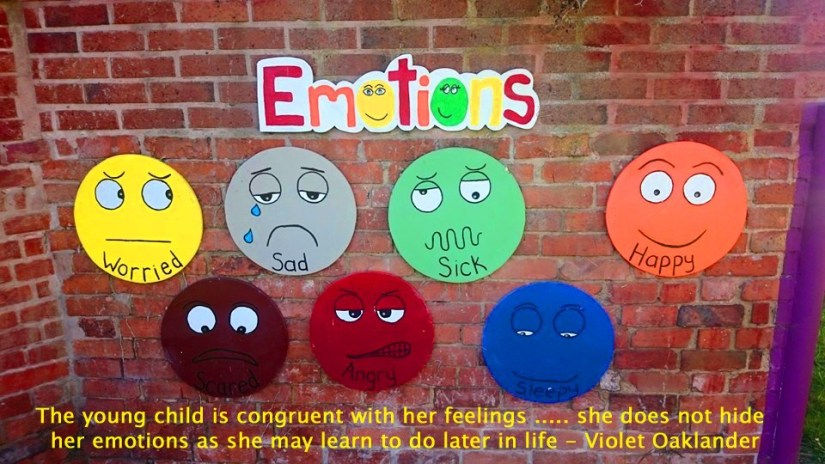
Learn to experience and express emotion.
Cultivate empathy and respect for thoughts and feelings of others.
Learn new social skills and relational skills with family.
Develop self-efficacy and thus a better assuredness about their abilities’.
 Flourish & Play